CLO 1.1
Explain advanced concepts and principles related to a selected contemporary topic in electrical and electronics engineering.
EE 499 · Special Topics
Follow the engineering chain from orbital motion and propagation to antennas, links, spacecraft, ground stations, coverage, and complete communication systems.
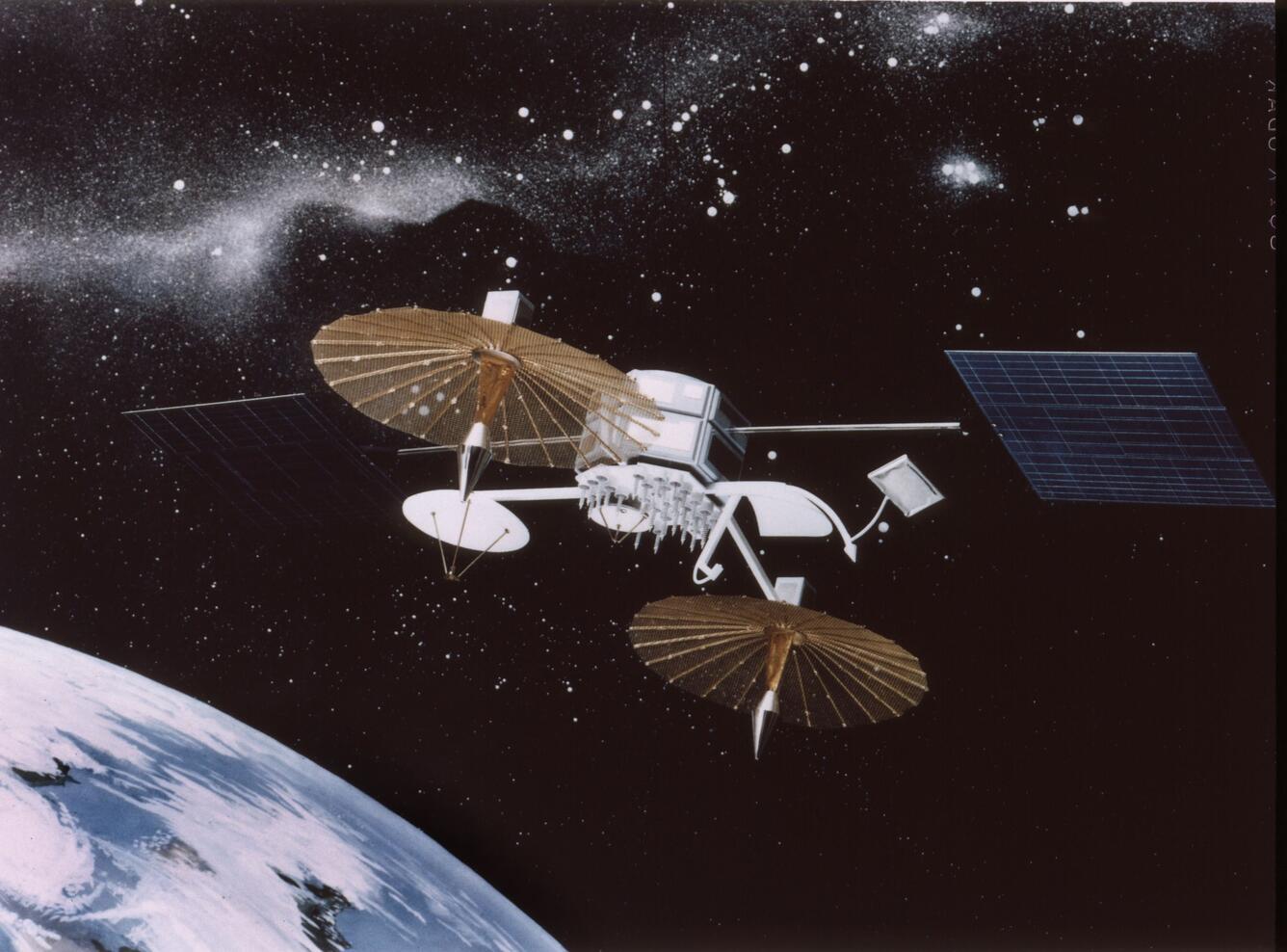
Course environment
Weekly lessons are the main teaching path. Laboratories, original notes, discussions, and references support that sequence without replacing it.
Course introduction
This learning space complements—not replaces—the classroom conversation.
Satellite Communications brings motion, electromagnetics, antennas, signal transmission, spacecraft payloads, and ground infrastructure into one system-level story. We will connect physical geometry to the communication decisions it creates.
Satellite Communications is the instructor-authorized subject for this offering of EE 499, whose official curriculum title is Special Topics In Electrical and Electronics Engineering.
The curriculum record supplies no offering-specific description or topic schedule; the narrative on this page is student-oriented teaching context.
Official EE 499 curriculum
Explain advanced concepts and principles related to a selected contemporary topic in electrical and electronics engineering.
Analyze engineering problems associated with the selected topic using appropriate theoretical and computational methods.
Apply relevant engineering tools, techniques, or methodologies to investigate problems related to the selected topic.
Evaluate alternative approaches, technologies, or solutions within the selected topic using appropriate technical criteria.
Develop a solution, model, system, or study addressing a problem related to the selected topic.
Demonstrate professional responsibility and independent learning in communicating developments related to the selected topic.
Wording and internal SO mappings above are reproduced exactly from the authoritative EE 499 curriculum record.
How we will learn
Independent/self-directed learning and flipped classroom.
Simulation and computer-based learning with guided problem solving and tutorials.
Design- and project-based learning, technical communication, and technical discussion.
Quizzes; homework and classwork assignments; major and final exams; simulation/computational assignments; oral technical presentation; design project assignment; and prototype/system demonstration.
This consolidated list reports official methods only. No assessment weights are present in the record.
Course landscape
This is a broad teaching landscape, not an official week-by-week syllabus.
Weekly learning modules
Weeks 1 through 9 are implemented; no later schedule is implied.